

AI-powered competitive analysis is changing how businesses understand and surpass their competition by using machine learning and data analytics. By incorporating AI tools into your competitive analysis approach, you can access detailed insights into market trends, competitor tactics, and opportunities that traditional methods often overlook. This complete guide explains how AI changes competitive analysis, including a focused look at GEO optimization, tool comparisons, and real-world application examples. Beyond surface-level monitoring, modern AI systems can parse millions of unstructured documents—news articles, social posts, earnings calls, customer reviews, and patent filings—and synthesize them into coherent narratives that reveal where the market is heading next. Natural language processing, computer vision, and time-series forecasting models work together to expose subtle shifts in competitor positioning, detect early signals of product pivots, and quantify customer sentiment with far greater precision than manual methods. As a result, teams can move from reactive reporting to proactive strategy, using data not simply to confirm assumptions but to uncover new avenues for growth.

How AI Changes Strategic Competitive Analysis
AI enhances competitive analysis by automating data collection, handling large datasets, and providing actionable insights quickly. This allows for real-time strategic adjustments and a deeper understanding of market dynamics. Instead of sifting through raw data, AI tools reveal narratives that uncover emerging themes, patterns, and opportunities, enabling teams to concentrate on decision-making. In practical terms, this shift means fewer hours assembling spreadsheets and more time crafting differentiated strategies—marketing messages that resonate with micro-segments, pricing models tuned to local elasticity, and product roadmaps aligned with unmet customer needs. AI can link signals that previously lived in separate silos: a cluster of new job postings at a competitor might correlate with an uptick in developer forum chatter, which in turn precedes a new feature launch. Knowledge graphs connect these dots to form hypotheses that strategy teams can validate quickly. Moreover, AI supports scenario planning by simulating how competitors might respond to your moves, allowing leaders to weigh trade-offs before committing resources.
GEO Optimization in AI Competitive Analysis
GEO optimization adapts competitive analysis to geographic strategies and audience targeting. AI excels here by analyzing location-based data to identify regional competitors, market needs, and localized search trends. With AI-driven GEO optimization, companies can tailor approaches for different markets, improving effectiveness and engagement. Geospatial models can compare store catchment areas, evaluate foot-traffic flows around competitors, and map regional demand hot spots down to the ZIP-code level. For digital-first businesses, GEO optimization also applies to localized SERPs, language preferences, device usage patterns, and regional ad auction dynamics. By blending demographic, psychographic, and mobility datasets, AI can suggest which neighborhoods are ripe for expansion, which cities are overserved, and which regions require a differentiated value proposition to win.
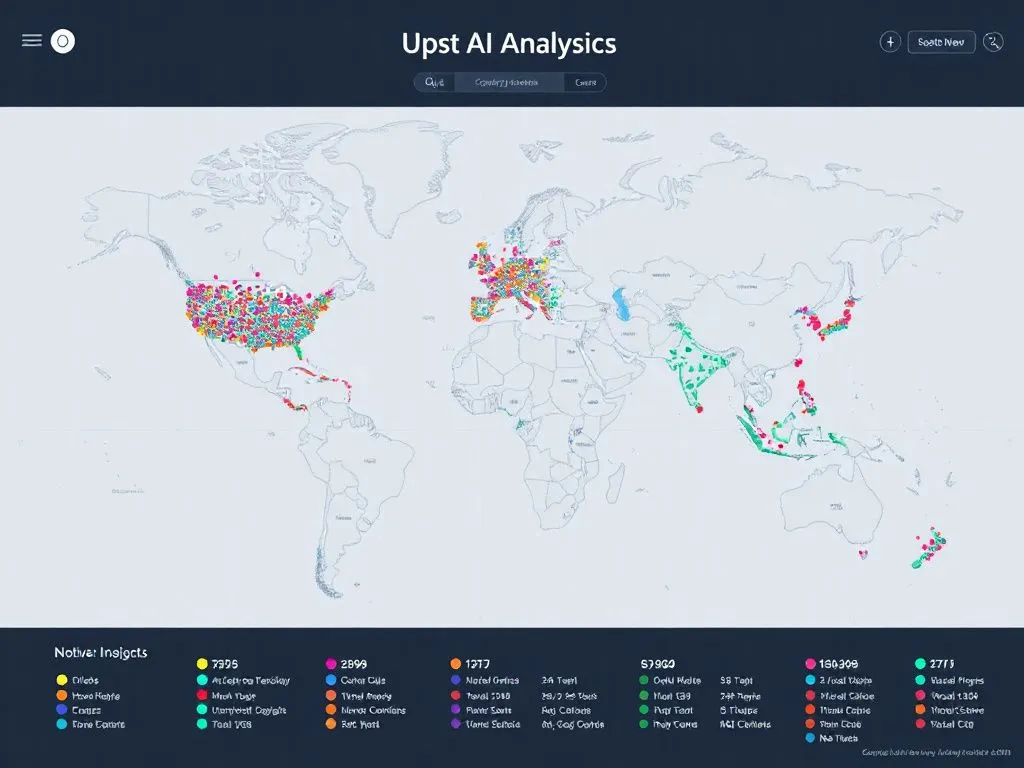
A practical example is customized content creation. With AI, businesses can produce content that reflects regional dialects and cultural nuances, enhancing local SEO and customer engagement. Tools that assess local competitor performance also highlight successful regional strategies, guiding strategic changes when necessary. For instance, AI can recommend referencing regional events, holidays, and sports rivalries in creative assets, or adapting product descriptions to local measurement conventions and idioms. It can also flag when competitors are leveraging local influencers or community partnerships to build credibility, prompting a counter-strategy that fits your brand voice. Additionally, GEO optimization extends to operational considerations: AI can suggest store hours aligned with neighborhood routines, recommend inventory mixes based on hyperlocal demand signals, and indicate when to launch geo-fenced promotions to capture nearby shoppers. On the technical side, ensuring consistent NAP (name, address, phone) data, optimizing Google Business profiles, and employing structured data for local markup are all actions AI can monitor and help maintain across multiple regions at scale.
Comparing AI Tools for Market Dynamics and Competitor Strategies
Many AI tools support competitive analysis, each with unique features and strengths. When selecting a tool, consider its integration with existing data systems, overall usability, and the specificity of the insights it provides. Some platforms excel at web monitoring and change detection (e.g., tracking price updates, policy changes, and new landing pages), while others specialize in social listening, ad intelligence, SEO and keyword analysis, or pricing and promotion optimization. Evaluate whether a tool offers robust APIs for data ingestion into your warehouse, flexible export options, and configurable alerts that fit your team’s workflow. Look for transparent methodology and explainability features so analysts can audit how insights were derived. Security, data governance, and regional compliance (such as GDPR or CPRA) should be part of the assessment, particularly when tools collect or process personally identifiable information or sensitive competitive intelligence. Lastly, consider the breadth of data coverage—global language support, regional media sources, app store listings, product catalogs—and the freshness of that data, which can make the difference between catching a move early and reacting after the fact.
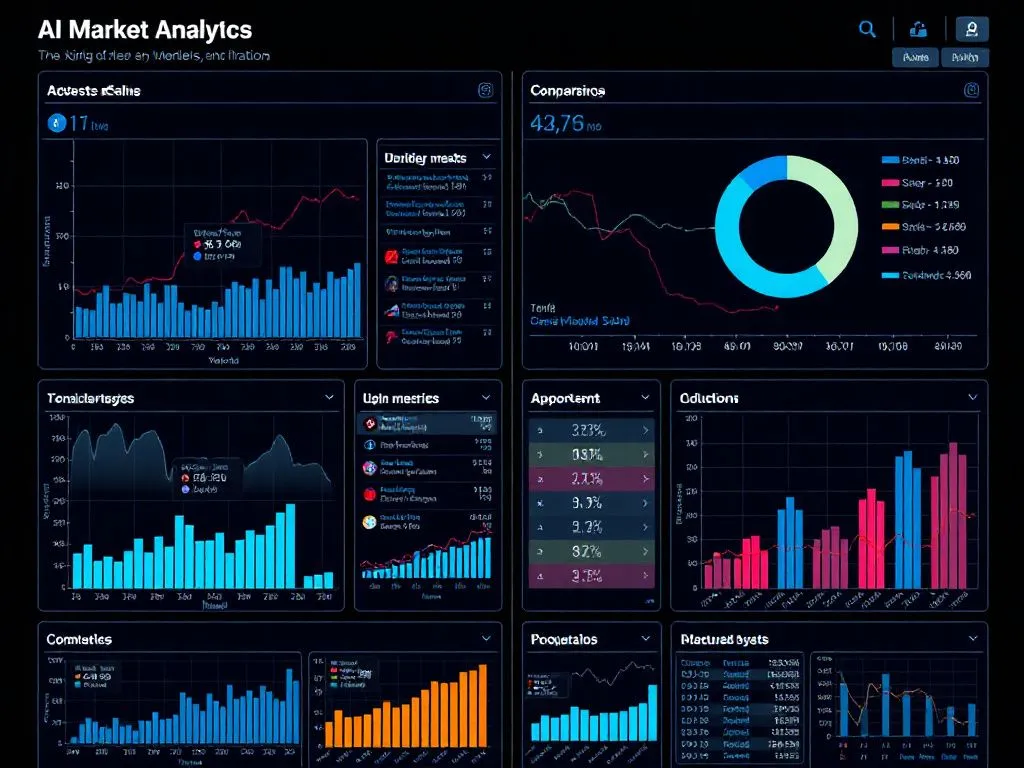
- Real-time Data Analysis: Focus on tools that provide real-time insights to stay ahead of changing market conditions. Timely data helps teams adjust strategies quickly as dynamics shift. Prioritize platforms with streaming data pipelines, low-latency alerting, and configurable thresholds so you can distinguish meaningful change from background noise. Real-time visibility is especially valuable during product launches, seasonal sales periods, and crisis moments when minutes, not days, determine advantage.
- Predictive Analytics: Tools using machine learning models can predict competitor moves and market trends, enabling proactive strategies. Seek capabilities such as demand forecasting, anomaly detection, and churn prediction that can be tied back to recommended actions—what price to set, which channel to scale, or which feature to prioritize. Predictive models should include backtesting, performance transparency, and guardrails to avoid overfitting to short-term patterns that fail in new conditions.
- Sentiment Analysis: AI can analyze customer feedback and reviews to assess public sentiment toward competitors, informing brand positioning. The most effective systems go beyond polarity (positive/negative) to extract aspects (e.g., “battery life,” “customer support,” “ease of setup”) and measure sentiment by attribute. This granularity enables more precise positioning and message testing. Multilingual, domain-specific sentiment models also help normalize cultural differences in expression across regions.
According to , integrating AI into competitive analysis not only improves current strategies but also offers a predictive view of potential market changes, which is invaluable for strategic planning. This forward-looking capacity helps leaders decide when to double down on a bet and when to pivot before a trend matures. It also surfaces second-order effects—how a competitor’s pricing change might reshape partner ecosystems, how regulatory proposals could alter category economics, or how a surge in hiring within a niche skill set may foreshadow a platform shift. Applying these predictions with disciplined experimentation prevents overreaction while preserving agility.
Real-World Examples of Successful AI-Driven Competitive Strategies
AI-driven strategies have been embraced across sectors such as retail and technology, demonstrating the significant benefits of using AI for competitive analysis. The following examples showcase these advantages. Organizations report faster cycle times for insight generation, more accurate forecasts, and improved cross-functional alignment because product, marketing, sales, and finance can rally around a shared, data-driven view of the market. Additionally, AI reduces the “signal-to-slide” gap—the time between an external change and an internal decision—translating to measurable revenue gains and cost savings.
For example, a leading tech company used AI tools to enhance its product development cycle. By analyzing competitor patents and product announcements, it planned R&D initiatives to fill market gaps and avoid direct competition, aligning with innovation trends in the industry. The team converted patent texts into vector embeddings to cluster emerging themes, compared filing velocities across competitors, and used topic modeling on developer forums to assess interest in particular features. This triangulation enabled a rolling roadmap that prioritized high-value differentiators, reduced duplicative work, and lowered IP risk by identifying crowded claim spaces early. The company also ran counterfactual simulations—asking how a competitor might react to a feature reveal—to inform launch sequencing and messaging.
In retail, AI was used to study shopper behavior and competitor pricing strategies. The tools identified pricing discrepancies and seasonal trends, allowing the retailer to adjust prices in real time and improve market position without sacrificing profitability. By linking competitor promotions to store-level sell-through and weather data, the retailer estimated local price elasticity and set guardrails to avoid margin-eroding races to the bottom. Dynamic pricing recommendations were paired with inventory visibility and fulfillment constraints, ensuring that promotional intensity matched available stock and lead times. Similar approaches have benefited hospitality brands calibrating room rates to local events and airline capacity, fintech companies benchmarking fees against niche challenger banks, and B2B SaaS vendors tuning packaging and discounting based on competitor win/loss patterns. In each case, the common thread is closing the loop between external signals and internal levers—content, price, product, channel—using AI to guide the right move at the right moment.

Steps to Implement AI-Powered Competitive Analysis
Implementing AI in competitive analysis works best with a structured plan. Here’s a step-by-step guide to help you get started: align on scope, establish governance for data and models, and create a shared rhythm for insight consumption. The most successful programs begin small—targeting a well-defined use case—then scale once value is proven and workflows are embedded. Treat the rollout as a change-management initiative as much as a technical deployment, ensuring executive sponsorship and clear roles across analytics, marketing, product, and finance.
1. Define Objectives and Metrics
Start with clear objectives—what questions should AI-driven analysis answer, and how do those answers support business goals? Establish metrics such as conversion rates, market share changes, or customer retention improvements to track effectiveness. Use a SMART framework (specific, measurable, achievable, relevant, time-bound) to frame hypotheses: for example, “Detect competitor price changes within 60 minutes and adjust our bids to preserve a 10% ROI threshold.” Tie metrics to decision rights, clarifying who acts on which alerts and within what time window. Consider a north-star metric (e.g., incremental revenue from competitive moves averted) and supporting indicators like forecast error reduction, insight-to-action cycle time, and content velocity for localized campaigns. Upfront clarity prevents model sprawl and aligns the team on what “good” looks like.
2. Gather and Integrate Data
Identify key data sources, including customer feedback, sales data, competitor information, and market reports. Use AI tools that integrate seamlessly with these streams to produce comprehensive insights. In practice, this often means combining internal datasets (CRM, web analytics, transaction logs, win/loss notes) with external feeds (news, social media, app stores, product catalogs, patent databases, job postings, and review platforms). Build ETL/ELT pipelines with clear data lineage, deduplication, and entity resolution so the same company, product, or location is consistently recognized across sources. Address compliance requirements early, define retention and access policies, and implement data quality checks (completeness, freshness, accuracy) that alert when inputs drift. The stronger your foundation, the more reliable and explainable your AI outputs will be.
3. Choose the Right AI Tools
Select AI tools that fit your needs. Consider data processing capabilities, integration flexibility, and the ability to deliver actionable insights. suggests seeking tools with user-friendly dashboards to make insights easier to understand and share across teams. Evaluate total cost of ownership—not just licensing, but also implementation, training, and maintenance. Prioritize platforms that offer sandbox trials or pilot programs so you can validate performance on your real data. Check for features like role-based access control, custom taxonomies for tagging competitors or product lines, and versioning so you can audit changes to models and dashboards. Consider vendor lock-in risks and the ability to export raw and enriched data back to your warehouse. Finally, look for human-in-the-loop capabilities that allow analysts to correct model outputs and improve accuracy over time.
4. Analyze and Interpret Data
Use AI algorithms to analyze the collected data and uncover insights. Go beyond what the data shows by interpreting findings within your strategic context. Human oversight remains essential for accuracy and relevance, as highlighted by . Blend techniques—topic modeling to summarize feedback themes, clustering to group similar competitors, anomaly detection to flag abrupt pricing or messaging shifts, and forecasting to anticipate category growth. Where possible, pair predictive analytics with causal inference or controlled experiments to separate correlation from causation. Encourage analysts to document assumptions, caveats, and alternative explanations for each major finding. Visualization matters: annotated timelines and layered maps can convey complex dynamics more effectively than dense tables. Above all, discipline your process so every insight is linked to a decision, an owner, and a time frame.
5. Implement Insights into Strategy
Turn insights into concrete actions. This may include refining marketing campaigns, adjusting pricing models, or altering product development plans. Integrate these moves smoothly into existing processes so they inform decisions effectively. Create standardized playbooks—if a competitor reduces price by X%, execute steps A, B, C; if sentiment around a rival’s new feature sours, deploy comparative content and reach out to at-risk accounts. Couple insights with experimentation frameworks: A/B test revised messaging, pilot dynamic pricing within defined guardrails, and prioritize roadmap changes using a scoring model that weights customer impact, differentiation, and effort. Include change management artifacts—training for sales, updated enablement materials, and clear escalation paths—so actions stick beyond the initial burst of activity.
6. Monitor and Adjust
Keep monitoring and refining to stay aligned with market dynamics. AI tools provide ongoing insights that help businesses remain responsive to change and maintain competitive advantages over time. Establish an operating cadence—daily alerts, weekly standups for fast-moving metrics, and monthly or quarterly reviews for structural shifts. Track model health (drift, precision, recall) and data freshness alongside business KPIs. Solicit feedback from end users on alert fatigue and relevance; tune thresholds or add filters where necessary. As the competitive landscape evolves, revisit your taxonomy of competitors, segments, and attributes to ensure the system continues reflecting reality. Continuous improvement turns a one-time analysis into a durable capability.
Challenges and Considerations in AI-Driven Competitive Analysis
While AI delivers substantial benefits, it’s important to recognize its limitations. Effective use depends on understanding both the potential and the boundaries of AI-generated insights. Teams should factor in ethics, privacy, and regulatory constraints, especially when working with location data, user-generated content, or personally identifiable information. Operationally, common pitfalls include overly broad problem statements, insufficient data governance, and failure to connect insights to owners and actions. A clear-eyed view of these risks helps organizations design safeguards without blunting the edge AI provides.

Recognizing the Limits of AI
AI tools mainly rely on public data; transformative insights may sometimes require complementary methods such as qualitative research or human intuition. notes that although AI can provide rich data, it does not replace human experience or strategic foresight. Public signals can also lag reality: a competitor may test new pricing with select accounts long before any website change appears. Private negotiations, channel incentives, and partner strategies often live in a “dark funnel” that models cannot fully observe. To mitigate these gaps, combine AI findings with expert interviews, customer councils, and frontline feedback from sales and support. Encourage red-teaming—intentionally probing where the model might be wrong—and record dissenting views for major decisions. When the stakes are high, require a pre-mortem: if this insight is off by 30%, what happens, and how do we contain the downside?
Data Quality and Integration
Data quality is critical. AI is only as strong as the data it receives, so inaccuracies or bias at the source can produce misleading conclusions. In supply chain-dependent sectors, keeping data current and accurate can be especially challenging. Normalize schema across sources, reconcile conflicting records, and guard against sampling bias (e.g., over-indexing on highly vocal reviewers or tech-savvy users). Implement automated checks for outliers, missingness, and sudden distribution shifts that could signal scraping issues or source policy changes. Document provenance so stakeholders know where each metric originated and how it was processed. A layered approach—raw, cleansed, and modeled datasets—helps maintain flexibility as requirements evolve without corrupting historical baselines.
Balancing AI Insights with Human Judgment
AI should complement, not replace, human judgment. Successful competitive analysis blends strategic intuition, contextual understanding, and human decision-making to turn insights into results. Establish a “competitive intelligence council” or similar forum where cross-functional leaders review key signals, debate implications, and approve actions. Train teams to interpret model confidence intervals and understand the difference between descriptive, predictive, and prescriptive analytics. Build explainability into workflows so decision-makers can inspect the evidence backing a recommendation. Above all, define decision rights: who can trigger price changes, who can green-light messaging shifts, and what evidence thresholds apply. This clarity ensures AI becomes a force multiplier rather than a source of confusion or overreach.
For service details and implementation options, explore Hunnt AI’s content creation service.
Conclusion: Integrating AI for Competitive Advantage
Incorporating AI into your competitive analysis process offers clear advantages, from greater efficiency to stronger strategic insight. By anchoring efforts in well-defined objectives and interpreting AI findings through a human lens, your business can secure and maintain a competitive edge. Start with a focused use case, invest in clean data pipelines, and adopt tools that make insights accessible to non-technical stakeholders. Pair predictions with disciplined experimentation, and maintain a steady operating cadence that turns external signals into coordinated action. Over time, this creates a learning organization—one that continuously senses the market, adapts with confidence, and compounds its advantage.
Hunnt.ai offers specialized AI-driven solutions to support businesses in this transformative process, ensuring tailored strategies that meet specific market needs. To explore how these tools can redefine your competitive analysis and craft a more effective market strategy, visit blog.hunnt.ai for more insights and assistance. Solutions can include configurable dashboards that surface high-signal competitor moves, connectors for common data sources, and governance features to keep models auditable and compliant. Whether you are localizing campaigns with GEO optimization, building an early-warning system for pricing shifts, or aligning your roadmap to white-space opportunities, a thoughtful AI approach—supported by the right partner—can translate intelligence into measurable impact.
Frequently Asked Questions
What is AI-powered competitive analysis?
AI-powered competitive analysis utilizes machine learning and data analytics to help businesses understand and surpass their competition by providing detailed insights into market trends, competitor tactics, and overlooked opportunities.
How does AI enhance competitive analysis?
AI enhances competitive analysis by automating data collection, managing large datasets, and delivering actionable insights quickly, enabling teams to make real-time strategic adjustments and focus on decision-making.
What is GEO optimization in the context of AI competitive analysis?
GEO optimization tailors competitive analysis to geographic strategies, using AI to analyze location-based data to identify regional competitors, market needs, and localized search trends.
What should be considered when comparing AI tools for competitive analysis?
When comparing AI tools, consider integration with existing data systems, usability, specificity of insights, data coverage, real-time capabilities, security, and compliance with data governance regulations.
How can AI assist with scenario planning in competitive analysis?
AI supports scenario planning by simulating potential competitor responses to strategic moves, allowing leaders to weigh trade-offs and make informed decisions before committing resources.
What are some practical applications of AI in competitive analysis?
Practical applications include customized content creation reflecting regional nuances, optimizing store hours based on neighborhood routines, and recommending inventory mixes based on hyperlocal demand signals.