

Embracing AI in e-commerce customer interactions can significantly boost sales and enhance engagement. With AI, businesses simplify communication, customize shopping, and manage customer questions effectively, creating a stronger interaction strategy. Beyond operational gains, AI becomes a growth capability that touches every stage of the customer journey—from discovery and consideration to purchase, fulfillment, and post-purchase support. Brands that use AI to orchestrate consistent experiences across web, mobile, social, and messaging apps reduce friction and improve conversion while safeguarding margins. AI also enables new levels of personalization at scale, tailoring not only product recommendations but also content, promotions, and service experiences to individual preferences and intent. This personalization increases customer lifetime value, reduces acquisition costs by improving relevance, and helps teams maintain a consistent brand voice while serving a global audience around the clock. When thoughtfully implemented with guardrails for accuracy and privacy, AI elevates both the customer experience and the efficiency of the teams who deliver it.
The Influence of AI on Customer Engagement
AI is transforming how e-commerce platforms connect with customers through real-time, customized interactions that enrich the experience and increase satisfaction. Using chatbots, voice assistants, and recommendation engines, businesses provide consistent, effective service that meets expectations. For example, on-site assistants can proactively greet visitors with context-aware messages—recognizing whether someone is browsing for the first time, returning to a previously viewed product, or comparing similar items—and then offer guidance, content, or incentives that are precisely timed. Dynamic content modules adapt to browsing behavior and sentiment, while AI-driven search corrects typos, expands queries, and prioritizes relevant, in-stock items. In cart and checkout, AI reduces abandonment by anticipating objections (such as shipping costs or delivery time) and surfacing the right options or support. Even after purchase, AI powers proactive communication about deliveries, back-in-stock alerts, and loyalty rewards, creating a steady rhythm of helpful touchpoints that sustain engagement and trust.

Predictive analytics helps foresee needs and preferences, allowing proactive service. By analyzing past interactions with machine learning, platforms offer targeted recommendations and personalized support, which can boost loyalty and create more sales opportunities. These models can estimate churn risk and customer lifetime value, enabling teams to prioritize high-impact interventions such as tailored offers, proactive outreach, or VIP service queues. Behavioral clustering and recency-frequency-monetary (RFM) analysis inform segmentation strategies, while session-level predictions help determine when to provide assistance in real time. Inventory-aware algorithms guide merchandising to avoid promoting out-of-stock items, and demand forecasting feeds supply planning and dynamic pricing. Modern approaches also address cold-start scenarios through content-based features, transfer learning, and carefully designed onboarding flows that quickly gather preference signals. To sustain accuracy as behavior shifts, organizations monitor for model drift, retrain on fresh data, and adopt privacy-preserving techniques that respect regulations and customer expectations.
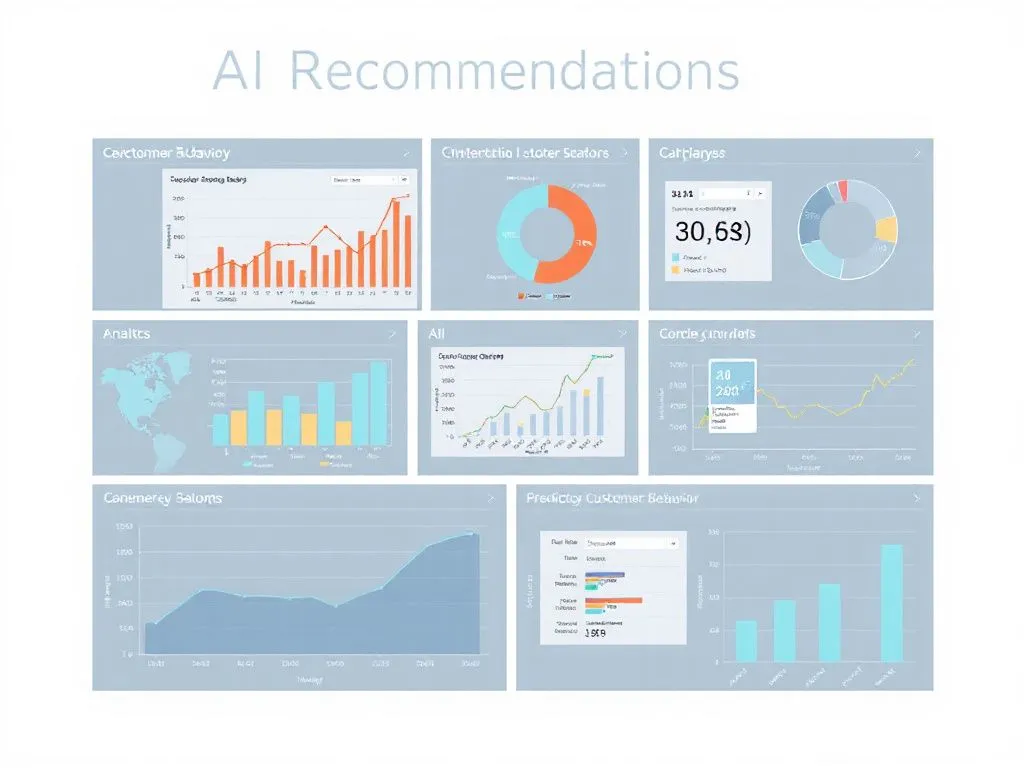
AI also enhances service by automating routine tasks and quickly resolving common questions, freeing human agents to concentrate on complex issues. The result is greater efficiency and quicker responses, which are key indicators for measuring customer satisfaction and loyalty (see ). Intelligent triage routes conversations to the right bot or human queue based on intent, urgency, and customer profile, while agent-assist tools summarize customer history, suggest next best actions, and propose compliant responses in real time. Knowledge bases are automatically kept current through AI-assisted content generation and gap analysis, making self-service more helpful and reducing escalations. AI can also translate messages, detect sentiment, and flag compliance or safety concerns, helping teams maintain quality across languages and regions. Key metrics—first response time, average handle time, first contact resolution, and recontact rate—improve when automation and human expertise work in tandem, ensuring customers get accurate answers with empathy and speed.

AI Tools and Technologies for E-commerce
E-commerce now provides a wide array of AI tools for customer interaction, from chatbots and virtual assistants to advanced analytics. These solutions improve shopping with instant support and personalized journeys. Complementary capabilities such as customer data platforms, journey orchestration engines, AI-powered search, and experimentation suites (A/B testing and feature flags) help unify data and coordinate experiences across channels. Modern stacks increasingly embrace composable architecture, exposing APIs and event streams so AI services can subscribe to behavior signals and react in milliseconds. Observability and monitoring tools track both technical performance and experience quality, allowing teams to tune models, refine prompts, and enforce policies as traffic scales. With the right foundation, businesses can mix best-of-breed vendors and homegrown components while keeping the experience coherent and the data secure.
AI chatbots offer 24/7 support, managing questions from order status to product recommendations. Using natural language processing (NLP), they understand and respond instantly, keeping interactions smooth and engaging ( ). Advances in large language models (LLMs) make bots more conversational, but the strongest results come from pairing LLMs with retrieval-augmented generation (RAG) that grounds answers in verified knowledge like policies, FAQs, and inventory. This reduces hallucinations and keeps information up to date. Effective chatbots can authenticate customers securely to perform account-specific tasks—such as modifying an order, checking loyalty points, or initiating a return—while masking sensitive data and adhering to privacy rules. They handle multi-turn dialogues, switch languages seamlessly, and gracefully escalate to human agents with full context. Teams improve reliability through prompt engineering, guardrails, and continuous conversation analysis, so the bot learns from real-world interactions while preserving brand tone and compliance.

Recommendation engines powered by collaborative filtering and deep learning analyze behavior to suggest products matched to individual preferences. This level of personalization helps maintain interest and supports a high-conversion environment. Techniques span user-based and item-based methods, session-based predictions for anonymous visitors, graph models that capture relationships across catalogs, and multimodal approaches that fuse image, text, and behavioral features. Strong systems factor in price sensitivity, inventory levels, seasonality, and margin targets to optimize both relevance and profitability. Merchandisers retain control through business rules—promoting new lines, excluding restricted items, or balancing diversity to avoid echo chambers. Explainable recommendations (“Because you viewed…”) increase trust, while bundles and complementary suggestions raise average order value. By evaluating models online with statistically sound tests and monitoring long-term effects like repeat purchase rates, teams ensure recommendations create sustainable value, not just short-term clicks.
As AI progresses, integration with Internet of Things (IoT) devices and voice-activated assistants like Alexa or Google Home is expanding. This enables seamless interaction across channels and devices, enriching the retail experience and encouraging loyalty. A shopper might reorder essentials by speaking to a smart speaker, scan a QR code in-store to see reviews and size guidance, or receive a push notification when they enter a geofenced area with a relevant promotion. Visual search allows customers to upload photos and find similar items instantly, while augmented reality previews reduce uncertainty for categories like furniture, cosmetics, and apparel. Behind the scenes, event-driven architectures stream signals from apps, stores, and devices to central decisioning services that respond in real time. As these touchpoints multiply, brands prioritize consent, transparency, and low-latency experiences so that convenience never compromises privacy or trust.

Practical Steps for Implementing AI Systems
Introducing AI in e-commerce requires a structured approach centered on strategy and customer results. The steps below can guide a successful integration: define a vision tied to measurable outcomes, prepare your data and governance foundation, and adopt an iterative delivery model that starts small and scales proven wins. Establish cross-functional ownership between product, data, engineering, marketing, and customer service, and appoint decision-makers who can balance speed with risk management. Conduct a data readiness audit to assess quality, coverage, and access controls, and create clear processes for updating content and models. Throughout the rollout, keep customers at the center—validate ideas with real users, monitor impact with leading and lagging indicators, and align changes with regulations such as GDPR and CCPA to safeguard trust.
1. Identifying Customer Pain Points
Begin by analyzing customer service data to identify common pain points like frequent inquiries or lengthy response times. Focus on areas where AI can automate effectively, such as order status updates or product information. Review transcripts, search logs, and knowledge base usage to find high-volume intents and zero-result queries that cause frustration. Map the end-to-end journey to understand where customers drop off or need reassurance, such as shipping estimates, sizing help, or return eligibility. Include qualitative inputs—reviews, social comments, and post-purchase surveys—to capture context and emotion. Prioritize pains that are frequent, easy to automate, and high impact on satisfaction or revenue, ensuring early AI efforts address needs that customers actually feel.
This involves reviewing ticket volumes and assessing where human resources are most consumed. Automating those tasks can improve efficiency and satisfaction by reducing response times and errors ( ). Segment issues by intent taxonomy and apply the 80/20 principle to find the few categories that drive the majority of contacts. Document root causes—unclear policies, product information gaps, or checkout friction—and fix upstream problems in parallel with automation. Identify edge cases and compliance-sensitive scenarios that must always route to a person. By quantifying effort (handle time, recontact rate) and quality (CSAT, NPS, resolution accuracy), you can set realistic automation targets and design experiences that deflect contacts without compromising trust or outcomes.
2. Setting Clear AI Goals
Establish measurable goals for AI, such as reducing response times by a certain percentage or boosting satisfaction scores. To measure effectiveness, track metrics like resolution rates, automation rates, and cost per resolution ( ). Set SMART objectives (specific, measurable, achievable, relevant, time-bound) with baselines and targets for each channel. Balance efficiency with quality by including guardrail metrics such as recontact rate, refund accuracy, and complaint rates. For revenue-facing use cases, add conversion lift, average order value, and repeat purchase rate. Align service targets with operational realities—staffing, seasonality, and product release cycles—so goals remain credible. Publish goals widely, and connect them to incentives so that teams stay focused on outcomes rather than outputs.
Clear objectives guide capability development and keep efforts aligned with broader business goals, enabling a meaningful transformation of the customer experience. Define what success looks like for customers—fewer steps to get help, faster answers, or more relevant suggestions—and link those benefits to financial metrics like lifetime value and retention. Specify brand voice parameters to ensure AI interactions reflect tone and values, especially when handling sensitive issues like delays or returns. Create decision policies for when to promote sales versus prioritize service, so recommendations feel helpful rather than intrusive. With explicit objectives and principles, teams can move quickly without sacrificing coherence or trust.
3. Selecting the Right AI Tools
Narrow AI solutions by how well they integrate with existing systems and their potential ROI (Return on Investment). Evaluate features, cost, and data privacy policies carefully, as these affect customer trust and compliance. Look for deep integrations with your commerce platform, CRM, order management, product information, and customer data platform so the AI can access the context it needs. Assess security posture (data residency, encryption, SOC 2/ISO certifications), model transparency, and content moderation capabilities. Consider total cost of ownership—licensing, implementation, ongoing tuning, and internal support—not just sticker price. Weigh the trade-offs between open-source flexibility and SaaS speed, and avoid lock-in by confirming data export and API coverage. A well-run proof of concept with production-like data is essential to validate vendor claims and quantify expected value.
Ensure chosen tools support core operations and improve workflow efficiency. Test them with real data to assess impact and identify necessary adjustments ( ). Pilot in a limited channel or traffic slice and compare against a strong baseline. Use shadow mode to have AI generate suggestions while humans still decide, capturing performance without risk. Red-team the system with adversarial prompts and edge cases to expose failure modes. Confirm observability—comprehensive logs, feedback capture, and analytics—so you can troubleshoot and iterate. Establish service-level objectives for latency and reliability, and define fallback behaviors when models are uncertain. These practices build confidence before scaling to more customers and use cases.
4. Training and Trust-Building
Invest in training so staff can collaborate with AI tools, know when to step in, and maintain a human touch. This ensures teams can manage hybrid AI-human interactions effectively. Train agents on conversation design fundamentals, the system’s capabilities and limits, and escalation criteria. Provide playbooks, prompt libraries, and annotated examples that illustrate desired tone and policy adherence. Encourage agents to give structured feedback on inaccuracies or gaps, and create a process for quickly updating knowledge or prompts. Measure adoption and confidence over time, recognize champions who model good practices, and offer refresher sessions as features evolve. When employees trust the tools, they use them more effectively—and customers feel the difference.
Also, communicate clearly when customers are interacting with AI to build trust. When people know an AI agent is assisting, they are more likely to cooperate and engage positively ( ). Set expectations about what the bot can do and make it easy to reach a person, especially for complex or urgent issues. Disclose how data is used, provide links to policies, and obtain consent where required. Design empathetic responses that acknowledge emotions and offer clear next steps. Share conversation transcripts when escalating so customers never need to repeat themselves. Transparency and easy human access increase satisfaction and reduce the risk of frustration when automation reaches its limits.
5. Evaluating and Iterating
Continuously monitor performance through analytics and customer feedback. Identify improvements and adapt AI functionality to stay in tune with changing customer needs and industry standards. Track leading indicators (engagement, abandonment, intent recognition) and lagging outcomes (resolution quality, CSAT, conversion) to catch issues early. Sample and review conversations regularly, using annotation to assess accuracy, compliance, tone, and empathy. Detect model drift and content staleness by correlating error patterns with catalog changes, policy updates, or seasonality. Refresh training data, expand coverage to new intents, and refine prompts based on real-world cases. Iterate in small, measurable steps so each change can be evaluated before broader rollout.
Regular assessments help businesses stay competitive and responsive to new technology, keeping AI systems effective and beneficial ( ). Establish a cadence for governance reviews that includes stakeholders from compliance, security, customer service, merchandising, and product. Audit for bias and accessibility, and test experiences across devices, languages, and assistive technologies. Maintain a clear rollback plan and disaster recovery procedures so you can respond quickly to issues. Use a transparent roadmap to prioritize improvements with the highest customer and business impact, and celebrate milestones that demonstrate progress. This disciplined approach ensures AI remains aligned with strategy as both technology and customer expectations evolve.
For service details and implementation options, explore Hunnt AI’s ecommerce product optimization service.
Conclusion: Embracing AI for a Competitive Edge
Mastering AI-driven customer interaction in e-commerce is not only a way to boost sales; it is also essential for meeting modern consumer expectations. With a systematic approach to AI, businesses can deliver more personalized, efficient, and satisfying experiences. As generative models, multimodal interfaces, and agentic workflows mature, the opportunity expands from answering questions and recommending products to orchestrating end-to-end tasks: finding items, comparing options, managing delivery preferences, and resolving issues with minimal effort from the customer. Brands that pair these capabilities with strong data governance, transparent communication, and continuous testing will outpace competitors on both experience and profitability. The result is a virtuous cycle where better interactions drive loyalty and repeat purchases, which in turn provide richer data to further refine and personalize the journey.
As AI continues to reshape customer interactions, platforms that blend these technologies with human capabilities will stand out and earn both customer loyalty and a reputation for forward-thinking innovation. For those ready to begin their AI journey, exploring the services at blog.hunnt.ai can provide valuable insights and tools tailored for success in the rapidly evolving e-commerce landscape. A practical path forward starts with a focused audit of customer pain points, a pilot in one high-impact area, and a clear plan for measurement and iteration. Build cross-functional alignment early, choose tools that integrate well with your stack, and invest in training that empowers teams to deliver empathetic, brand-aligned service. By maintaining a customer-first mindset and improving continuously, organizations can turn AI from a buzzword into a durable competitive advantage that benefits shoppers, employees, and the business alike.
Frequently Asked Questions
How does AI enhance customer interactions in e-commerce?
AI enhances customer interactions by simplifying communication, customizing shopping experiences, and effectively managing customer inquiries, which leads to stronger engagement and higher sales.
What role does AI play in personalizing the shopping experience?
AI personalizes the shopping experience by tailoring product recommendations, content, and service experiences to individual preferences and intent, increasing customer lifetime value and improving relevance.
What tools does AI provide for customer support in e-commerce?
AI provides tools such as chatbots, virtual assistants, and advanced analytics, which offer instant support and help create personalized customer journeys.
How does AI improve efficiency in customer service?
AI improves efficiency by automating routine tasks, quickly resolving common questions, and allowing human agents to focus on more complex issues, resulting in faster response times and higher customer satisfaction.
What technologies support AI-driven customer interactions?
Technologies that support AI-driven customer interactions include customer data platforms, journey orchestration engines, AI-powered search, and experimentation suites, which help unify data and coordinate experiences across channels.
How does predictive analytics benefit e-commerce businesses?
Predictive analytics benefits e-commerce by foreseeing customer needs and preferences, allowing for proactive service and targeted recommendations that boost loyalty and sales opportunities.