
AI search is changing how people discover information online. Instead of only clicking traditional blue links, users now ask questions inside tools like ChatGPT, Perplexity, and Google AI Overviews, then receive summarized answers, recommendations, comparisons, and citations.
This does not mean traditional SEO is dead. It means your website must be easier for both search engines and AI systems to understand, summarize, trust, and cite. To compete in this new environment, your content needs clear structure, strong technical SEO, schema markup, entity clarity, useful answers, and visible expertise.
In this guide, you’ll learn how to optimize your website for AI search, ChatGPT-style answers, Perplexity citations, and Google AI Overviews using practical SEO and GEO techniques.
Quick Answer
To optimize your website for ChatGPT, Perplexity, and Google AI Overviews, create clear answer-focused content, use structured data, build topical authority, improve technical SEO, strengthen internal links, show expertise, keep content updated, and make your pages easy to crawl, understand, and cite.
AI Search Optimization Checklist
Before going deeper, use this checklist to understand what matters most when preparing a website for AI-driven search experiences.
| Optimization Area | Why It Matters for AI Search | What to Improve First |
|---|---|---|
| Technical SEO | AI systems and search engines need crawlable, indexable, fast pages. | Fix indexing, crawl errors, redirects, speed, mobile usability, and sitemap issues. |
| Structured Data | Schema helps machines understand articles, products, FAQs, authors, and organizations. | Add Article, FAQ, Breadcrumb, Organization, Product, or SoftwareApplication schema where relevant. |
| Answer-Focused Content | AI systems prefer clear, extractable answers that directly satisfy user questions. | Add concise summaries, definitions, examples, steps, tables, and FAQs. |
| Entity Clarity | AI search relies on understanding people, brands, products, topics, and relationships. | Use consistent names, clear descriptions, author details, and internal links. |
| Topical Authority | AI systems are more likely to trust websites that cover a topic deeply and consistently. | Create topic hubs and connect supporting articles with contextual internal links. |
| Trust Signals | AI-generated answers need reliable sources, especially for business, medical, financial, or technical topics. | Show authorship, update dates, examples, sources, methodology, and real experience. |
What Is AI Search Optimization?
AI search optimization is the process of making your website easier for AI systems, answer engines, and search engines to understand, summarize, and cite. It combines traditional SEO, technical SEO, content strategy, structured data, entity SEO, and Generative Engine Optimization, also known as GEO.
Traditional SEO focuses on ranking pages in search results. AI search optimization focuses on becoming a trusted source that can be used inside AI-generated answers, conversational search, AI Overviews, and citation-based answer engines.
A strong AI search strategy should answer these questions:
- Can search engines crawl and index the page?
- Can AI systems understand what the page is about?
- Does the page answer a clear user question?
- Is the answer easy to extract, summarize, and cite?
- Does the website show expertise and trust?
- Is the content connected to a broader topic cluster?
If you want to understand the broader concept, read this guide on Generative Engine Optimization for businesses.
Understanding ChatGPT, Perplexity, and Google AI Overviews
ChatGPT and Conversational Discovery
ChatGPT-style experiences are conversational. Users often ask full questions, request comparisons, ask for recommendations, or want a step-by-step explanation. This means your content should not only target keywords, but also answer natural questions clearly.
To make your content more useful for conversational AI, include:
- Clear definitions near the beginning of the page.
- Short direct answers before deeper explanations.
- Step-by-step workflows.
- Comparison tables.
- Examples and use cases.
- FAQs that match real user questions.
- Consistent terminology for important entities.
Perplexity and Citation-Based Answers
Perplexity is known as an answer engine that often presents summarized responses with cited sources. To improve your chances of being useful in citation-based AI search, your pages should be clear, specific, verifiable, and easy to quote.
Useful improvements include:
- Use concise paragraphs focused on one idea.
- Add original examples, workflows, or practical observations.
- Use clear headings that match search intent.
- Keep claims specific and avoid vague marketing language.
- Show publish and update dates where possible.
- Make author and company information easy to understand.
Google AI Overviews and Search Visibility
Google AI Overviews summarize information directly inside search results for some queries. To improve your chances of being considered useful in this environment, your content should be helpful, well-structured, technically accessible, and supported by strong topical signals.
Google AI Overviews SEO depends on the same foundation as strong search visibility: useful content, crawlability, indexing, authority, relevance, and clear page structure. AI search does not replace technical SEO. It makes technical SEO and content clarity even more important.
If your pages are structured well but still not appearing, check whether indexing issues are blocking discovery.
1. Build a Strong Technical SEO Foundation
AI visibility still depends on classic crawlability. If your pages are blocked, slow, broken, or not indexed, AI systems and search engines may struggle to access and understand your content.
Start by reviewing your technical SEO foundation:
- Make sure important pages are indexable.
- Submit a clean XML sitemap.
- Fix 404 errors and redirect issues.
- Remove accidental noindex tags.
- Improve Core Web Vitals and page speed.
- Check mobile usability.
- Make internal links crawlable in HTML.
- Use canonical tags correctly.
Unresolved technical SEO issues can weaken your chances of appearing in AI-generated answers, even if your content is strong.
For a complete technical roadmap, visit the Technical SEO Hub.
2. Use Structured Data to Improve Machine Understanding
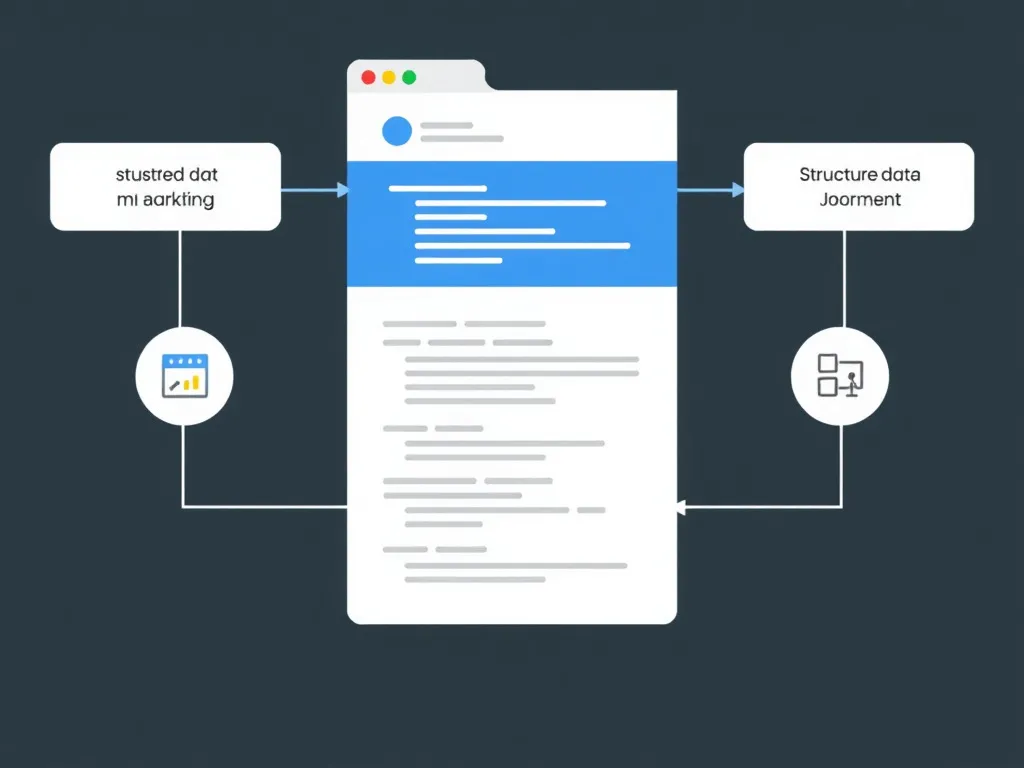
Structured data helps search engines and AI systems understand your page more clearly. It gives machines extra context about your content, author, organization, products, FAQs, breadcrumbs, and software features.
One of the fastest ways to improve machine readability is to implement structured data correctly across articles, products, and key landing pages.
Useful schema types for AI search optimization
- Article or BlogPosting Schema: Helps clarify the article title, author, dates, image, and publisher.
- FAQPage Schema: Helps structure common questions and answers.
- BreadcrumbList Schema: Helps explain site hierarchy.
- Organization Schema: Strengthens brand and entity signals.
- Person Schema: Supports author and expert identity.
- Product Schema: Useful for product and SaaS pages.
- SoftwareApplication Schema: Useful for AI tools, SaaS platforms, and software products.
Structured data best practices
- Use JSON-LD where possible.
- Make sure schema matches visible content.
- Do not mark up fake or misleading information.
- Validate schema after theme or plugin updates.
- Use consistent organization and author information.
- Monitor structured data enhancements in Google Search Console.
3. Create Answer-Focused Content
AI systems work best with clear, direct, well-organized answers. If your content is vague, overly promotional, or buried under long introductions, it becomes harder for AI systems to extract useful information.
A strong AI-friendly page usually includes:
- A direct answer near the top of the page.
- Clear H2 and H3 headings.
- Short paragraphs focused on one idea.
- Tables for comparisons and checklists.
- Step-by-step instructions.
- Definitions for important terms.
- Examples that show real use cases.
- FAQs that match natural questions.
Example of AI-friendly formatting
<h2>What is AI search optimization?</h2>
<p>AI search optimization is the process of making website content easier for AI systems and search engines to understand, summarize, and cite.</p>
How to improve it
-
- Use clear headings.
-
- Add structured data.
-
- Build topical authority.
-
- Improve technical SEO.
This format gives users and AI systems a clear answer, followed by supporting details.
4. Strengthen Entity SEO and Brand Clarity
AI systems need to understand entities: people, companies, products, services, places, topics, and relationships between them. If your brand or product is described inconsistently, machine understanding becomes weaker.
To improve entity clarity:
- Use your brand name consistently.
- Create clear About, Contact, and Product pages.
- Describe what your product does in simple language.
- Use Organization schema.
- Use author bios for expert content.
- Link related topics internally.
- Use consistent terminology across articles.
For SaaS and AI tools, it also helps to explain the product category clearly. For example, you can compare an AI SEO agent vs an AI SEO tool to help users and AI systems understand the difference.
5. Build Topic Clusters for AI Search and GEO
AI search optimization depends heavily on topical depth. One article is rarely enough to establish authority. You need connected content that covers a topic from multiple angles.
For example, an AI SEO topic cluster could include:
- What is AI SEO?
- What is GEO?
- How to optimize for AI Overviews.
- Best AI SEO tools.
- AI SEO agent vs AI SEO tool.
- AI SEO workflow from research to publishing.
- How technical SEO supports AI search visibility.
Each article should link to related articles naturally. This helps users move through the topic and helps search engines understand the relationship between the pages.
After creating a dedicated AI SEO hub, connect this article to that hub and link the hub back to all supporting AI SEO and GEO articles.
6. Add Trust Signals and Experience
AI search systems and users both need trust. Generic content is less useful than content that shows real experience, clear authorship, and practical evidence.
Improve trust signals by adding:
- Author name and role.
- Updated date.
- Real examples or screenshots.
- Original observations from your own work.
- Clear explanations of how recommendations were created.
- Links to relevant supporting pages.
- Transparent product positioning.
Avoid exaggerated claims. AI search visibility is not guaranteed by one tactic. It comes from a combination of strong content, technical accessibility, structured data, internal linking, authority, and consistency.
7. Improve Performance and Security
Fast, secure, and stable websites create better user experiences and cleaner crawl signals. If pages load slowly, break on mobile, or rely on unstable rendering, both users and crawlers may struggle.
Focus on:
- Core Web Vitals.
- Fast server response times.
- Compressed images.
- Clean HTML structure.
- HTTPS.
- Accessible design.
- Stable rendering on mobile.
- Reduced third-party script bloat.
Technical SEO and AI search optimization work together. Strong performance makes your content easier to access, and clear content makes it easier to understand.
8. Monitor AI Search and SEO Performance

AI search optimization should be measured over time. Because AI surfaces are still evolving, you need to track both traditional SEO signals and AI visibility signals.
Monitor:
- Google Search Console impressions and clicks.
- Pages gaining visibility for AI-related queries.
- Queries related to AI Overviews, ChatGPT SEO, GEO, and AI search.
- Referral traffic from AI platforms where available.
- Brand mentions in AI answers.
- Content sections that earn engagement.
- Indexing and crawling changes.
- Structured data enhancements.
Useful SEO workflow
- Find AI search queries in Google Search Console.
- Identify pages with impressions but low clicks.
- Improve titles, meta descriptions, and introductions.
- Add concise answers, tables, FAQs, and examples.
- Strengthen internal links from relevant pages.
- Add schema markup where useful.
- Request indexing after meaningful changes.
- Review performance after 2 to 4 weeks.
9. Practical AI Search Optimization Example
Imagine a SaaS company wants to appear for queries about “best AI SEO tools for small businesses.” A weak page might only list product features. A stronger AI-optimized page would include:
- A direct answer explaining who the tool is best for.
- A comparison table.
- Use cases for small businesses, agencies, and content teams.
- Clear pricing or plan information if available.
- FAQ content that matches real buying questions.
- Product or SoftwareApplication schema.
- Internal links to AI SEO workflow, GEO, and technical SEO resources.
- Updated dates and transparent claims.
This makes the page more useful for users and easier for AI systems to summarize or reference.
10. Common Mistakes in AI Search Optimization
Avoid these mistakes when optimizing for ChatGPT, Perplexity, Google AI Overviews, and other AI-driven search experiences:
- Writing only for keywords: AI search also needs context, entities, clarity, and helpful answers.
- Ignoring technical SEO: AI visibility is limited if pages are not crawlable or indexable.
- Using vague content: Generic claims are harder to cite and less useful for users.
- Skipping structured data: Missing schema can weaken machine understanding.
- Publishing isolated articles: Build topic clusters, not disconnected posts.
- Overusing AI-generated content without review: Human expertise and accuracy still matter.
- Not updating content: AI search topics change quickly, so outdated pages lose usefulness.
AI Search Optimization FAQs
What is AI search optimization?
AI search optimization is the process of making your website easier for AI systems, answer engines, and search engines to understand, summarize, and cite. It combines SEO, technical SEO, structured data, entity clarity, content formatting, and GEO.
How do I optimize my website for Google AI Overviews?
Start with helpful content, clear structure, strong technical SEO, schema markup, internal links, topical authority, and trust signals. Google AI Overviews rely on content that is accessible, relevant, and easy to understand.
How do I optimize for ChatGPT?
Create content that answers natural questions clearly. Use concise definitions, step-by-step guidance, examples, FAQs, and consistent terminology. Make your brand, product, and expertise easy to understand.
How do I optimize for Perplexity?
Write clear, specific, verifiable content that can be cited. Add author information, update dates, original insights, structured sections, and supporting internal links.
Is GEO different from SEO?
GEO, or Generative Engine Optimization, focuses on improving visibility in AI-generated answers and answer engines. SEO is broader and includes traditional search visibility. The best strategy combines both.
Does structured data help AI search visibility?
Structured data does not guarantee AI visibility, but it helps search engines and AI systems understand page context more clearly. It is most effective when combined with useful content, technical SEO, and strong internal links.
Can AI SEO replace traditional SEO?
No. AI SEO builds on traditional SEO. Crawling, indexing, site speed, internal links, content quality, authority, and user experience still matter. AI search makes these foundations even more important.
Conclusion: Build for Humans, Structure for AI
Optimizing for ChatGPT, Perplexity, and Google AI Overviews is not about tricking AI systems. It is about making your website clearer, more useful, more trustworthy, and easier to understand.
Start with the foundations: technical SEO, crawlability, indexing, page speed, structured data, and helpful content. Then build topic clusters, add internal links, improve entity clarity, and create answer-focused sections that directly help users.
AI search will continue to evolve, but the strongest strategy remains stable: publish useful content, structure it clearly, support it with technical SEO, and keep improving based on real data.
To continue building your AI search strategy, read the guide on Generative Engine Optimization, explore the Technical SEO Hub, or see how Hunnt AI helps teams improve SEO workflows.