

AI SEO tools are changing how small businesses, agencies, and content teams plan, optimize, and scale organic growth. Instead of spending hours on manual keyword research, content briefs, technical checks, and reporting, teams can now use AI to move faster and make better SEO decisions.
But choosing the right AI SEO tool is not only about finding software that can generate content. The best AI SEO platforms should help you understand search intent, build topic clusters, improve technical SEO, optimize content, monitor performance, and support a repeatable SEO workflow.
In this guide, we compare practical AI SEO tools for small businesses and agencies, explain what to look for, and show how to choose the right platform based on your goals, budget, team size, and workflow.
Quick Answer
The best AI SEO tools help teams with keyword research, content briefs, technical SEO checks, on-page optimization, internal linking, performance monitoring, and SEO automation. Small businesses usually need simple, affordable tools that save time, while agencies need scalable workflows, reporting, collaboration, and multi-client management.
Before choosing a platform, start with the AI SEO Hub to understand how AI SEO, GEO, AI Overviews, ChatGPT SEO, Perplexity SEO, and automation work together.
AI SEO Tools Comparison Table
Different AI SEO tools serve different needs. Some are stronger for keyword research and competitive analysis, some for content optimization, and others for workflow automation or topical authority planning.
| Tool | Best For | Main Strength | Best Fit |
|---|---|---|---|
| Hunnt AI | AI SEO workflows, technical SEO, content planning, and automation | Connecting SEO research, optimization, publishing support, and AI-driven workflows | Small businesses, agencies, and teams that want a more connected SEO system |
| Semrush | Keyword research, competitor analysis, SEO audits, and reporting | Large SEO database and broad digital marketing toolkit | Agencies and teams that need an all-in-one SEO and marketing suite |
| Surfer SEO | On-page optimization and content scoring | Content editor, SERP-based recommendations, and NLP guidance | Content teams that want to optimize articles against competing pages |
| MarketMuse | Content strategy and topical authority | Content inventory, topic modeling, and gap analysis | Teams managing large content libraries and strategic content clusters |
What Is an AI SEO Tool?
An AI SEO tool is software that uses artificial intelligence, machine learning, or automation to support search engine optimization tasks. These tasks can include keyword research, content briefs, on-page optimization, technical SEO checks, internal linking suggestions, competitor analysis, and performance monitoring.
Traditional SEO tools often provide data. AI SEO tools go further by helping teams interpret that data and turn it into recommended actions. For example, an AI SEO tool might identify a topic cluster, suggest article outlines, detect missing subtopics, recommend internal links, or highlight indexing problems that need attention.
The best AI SEO tools should help answer practical questions such as:
- Which topics should we target next?
- Which pages need content updates?
- Which technical SEO issues are blocking growth?
- Which keywords match commercial or informational intent?
- Which pages need stronger internal links?
- Which content gaps are competitors using to outrank us?
- Which workflow can help us publish and improve content consistently?
If you are new to AI search, read our guide to Generative Engine Optimization to understand how GEO connects with AI SEO and AI-generated search experiences.
What Should the Best AI SEO Tools Do?
A strong AI SEO platform should support more than content generation. It should help your team create a full SEO system that connects research, technical SEO, content planning, publishing, optimization, and monitoring.

1. Keyword Research and Topic Discovery
AI SEO tools should help identify topics, keywords, search intent, and content opportunities. Instead of only showing keyword volume, the tool should help you understand which topics are realistic, valuable, and connected to your business goals.
Useful features include:
- Keyword clustering.
- Search intent classification.
- Content gap analysis.
- Topic suggestions.
- Commercial vs informational intent detection.
- Competitor topic comparison.
2. Content Briefs and On-Page Optimization
AI SEO tools can help writers create stronger content briefs and optimize pages based on search intent, competing pages, semantic coverage, headings, questions, and internal link opportunities.
A useful content workflow should include:
- Recommended H2 and H3 structure.
- Questions to answer.
- Entity and subtopic suggestions.
- Recommended internal links.
- Meta title and description ideas.
- Readability and content depth checks.
3. Technical SEO and Indexing Support
AI SEO tools should also help detect technical SEO issues, indexing problems, structured data gaps, broken links, redirect errors, and crawl problems.
This matters because content cannot perform if Google cannot discover, crawl, render, understand, or index it. For a complete technical foundation, explore the Technical SEO Hub.
4. Internal Linking and Topic Clusters
Internal linking is one of the most underrated areas of AI SEO. A strong tool should help identify orphan pages, weakly linked pages, and opportunities to connect related articles into topic clusters.
For example, an AI SEO cluster might connect articles about AI search optimization, GEO, AI SEO tools, SEO automation, AI SEO agents, and technical SEO.
5. Workflow Automation and Monitoring
The best tools should support a complete AI SEO workflow from keyword research to publishing and performance monitoring.
This can include:
- Automated content briefs.
- Technical SEO checks.
- Content update suggestions.
- Performance alerts.
- Publishing workflows.
- Reporting dashboards.
- Ongoing optimization recommendations.
Best AI SEO Tools for Small Businesses and Agencies
1. Hunnt AI
Hunnt AI is designed for teams that want to connect SEO research, technical SEO insights, AI content workflows, and publishing support in one system. Instead of treating SEO as disconnected tasks, Hunnt AI helps businesses organize SEO work into a repeatable process.
Hunnt AI is especially useful for teams that want to:
- Plan SEO content more efficiently.
- Identify technical SEO opportunities.
- Improve content structure and optimization.
- Support AI SEO and GEO workflows.
- Connect content planning with publishing.
- Scale SEO without building a large in-house team.
Where Hunnt AI fits best: small businesses, agencies, and growing teams that need a practical SEO workflow system rather than only a writing assistant or a keyword database.
Some businesses need more than a tool, they need an AI SEO agent that can support continuous optimization, technical checks, content planning, and workflow execution.
2. Semrush
Semrush is a broad SEO and digital marketing platform that supports keyword research, competitor analysis, backlink analysis, site audits, content planning, rank tracking, and reporting. Its AI-powered features can help teams move from raw data to practical recommendations faster.
Semrush can be a strong fit for agencies managing multiple clients because it combines many SEO and marketing functions in one platform.
Best for
- Agencies that need a wide SEO toolkit.
- Competitor research.
- Keyword discovery and clustering.
- SEO audits and monitoring.
- Reporting for clients or stakeholders.
Potential limitations
- Can feel complex for beginners.
- May be more than a very small business needs at the beginning.
- Requires a clear workflow to get the most value.
3. Surfer SEO
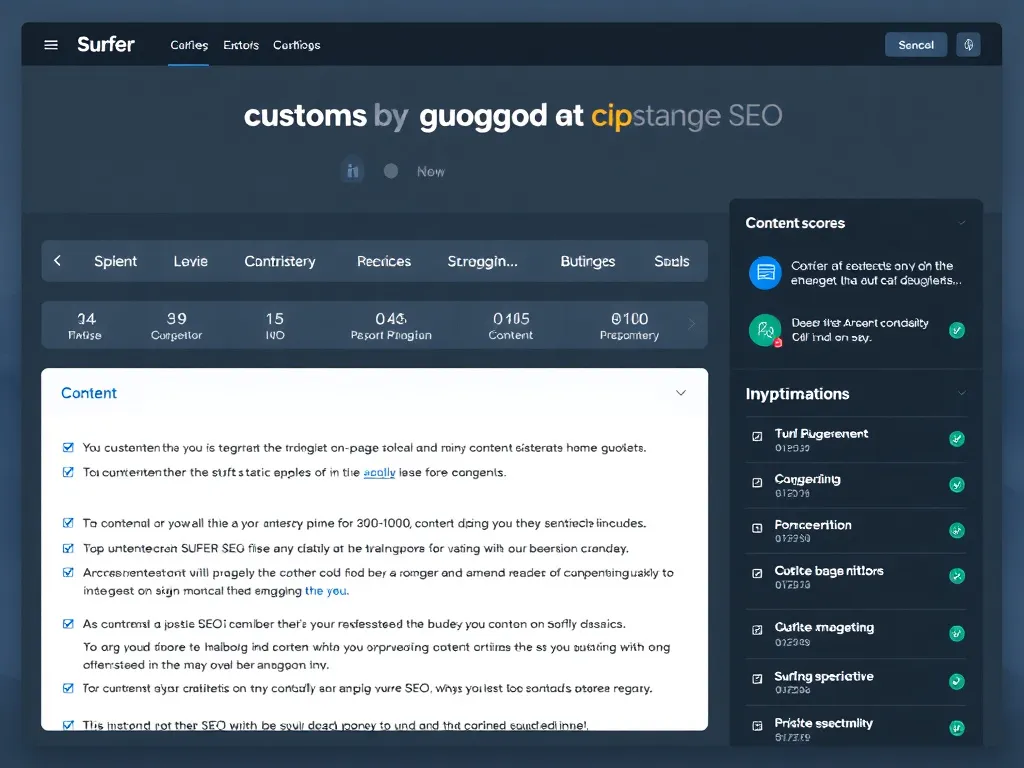
Surfer SEO is focused on content optimization and on-page SEO. It helps writers compare their content against top-ranking pages and improve structure, semantic coverage, headings, and content depth.
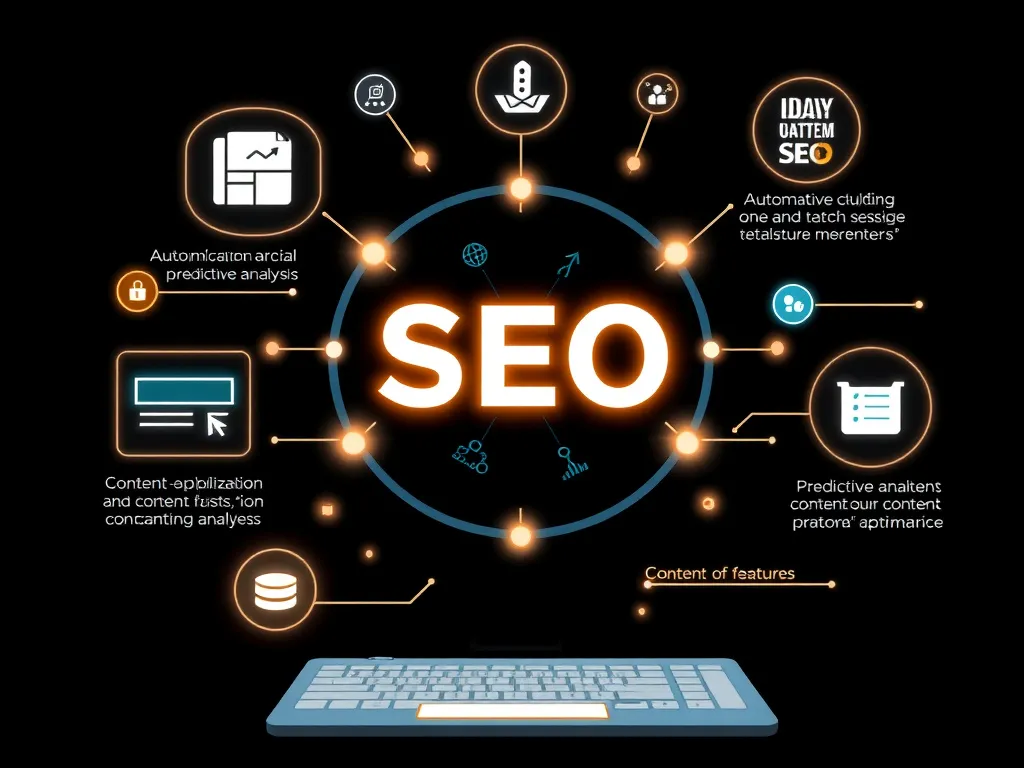
Surfer SEO is especially useful for content teams that publish or update many articles and want clear on-page guidance while writing.
Best for
- Blog content optimization.
- On-page SEO recommendations.
- Content scoring.
- SERP-based content briefs.
- Writers who need structured optimization guidance.
Potential limitations
- Less focused on technical SEO compared with broader SEO suites.
- Not a full replacement for strategy, internal linking, or editorial judgment.
- Teams should avoid chasing scores at the expense of originality and usefulness.
4. MarketMuse
MarketMuse focuses on content strategy, content quality, and topical authority. It helps teams analyze content inventories, identify gaps, plan clusters, and prioritize updates based on opportunity.
MarketMuse can be useful for larger websites or teams that already have a significant content library and need help deciding what to improve, consolidate, expand, or create next.
Best for
- Content strategy.
- Topic modeling.
- Content gap analysis.
- Topical authority planning.
- Large content inventories.
Potential limitations
- May be more advanced than what very small teams need at the beginning.
- Requires strategic content planning to get full value.
- Works best when paired with strong editorial processes.
How to Choose the Right AI SEO Tool
The right AI SEO tool depends on your business model, team size, budget, technical maturity, and SEO goals. A small local business does not need the same stack as an agency managing dozens of client websites.
Choose based on your main problem
| Your Main Need | What to Look For |
|---|---|
| Need content ideas | Keyword clustering, topic discovery, search intent analysis, content gap detection. |
| Need better articles | Content briefs, on-page optimization, semantic suggestions, FAQ recommendations. |
| Need technical SEO fixes | Indexing checks, crawl issue detection, sitemap review, redirects, structured data checks. |
| Need agency workflows | Multi-client dashboards, collaboration, reporting, approval flows, repeatable processes. |
| Need automation | AI workflows, scheduled monitoring, content updates, internal linking suggestions, publishing support. |
Questions to ask before choosing
- Does the tool support our actual SEO workflow?
- Does it help with strategy or only content generation?
- Can it detect technical SEO problems?
- Does it support internal linking and topic clusters?
- Is it easy for non-technical team members?
- Can it integrate with our CMS or publishing process?
- Does it help us measure outcomes, not just produce content?
- Can we maintain quality and brand voice while using it?
Best AI SEO Tools for Small Businesses
Small businesses usually need tools that save time, reduce manual work, and help them publish better content without hiring a large SEO team.
For small businesses, prioritize tools that help with:
- Topic discovery.
- Content planning.
- Basic technical SEO checks.
- Simple recommendations.
- Publishing support.
- Clear reporting.
- Affordable workflows.
Small businesses should avoid overly complex stacks at the beginning. It is better to use one platform consistently than to pay for multiple tools without a clear process.
If your team is small, SEO automation can be more practical than hiring a full in-house team immediately. Read more about why small businesses should automate SEO.
Best AI SEO Tools for Agencies
Agencies need a different kind of AI SEO tool. They need speed, consistency, reporting, and repeatable processes across multiple clients.

Agencies should prioritize tools that support:
- Multi-site or multi-client management.
- Standardized SEO workflows.
- Content briefs at scale.
- Technical audits.
- Approval workflows.
- Client reporting.
- Performance monitoring.
- Internal linking and content cluster management.
For agencies, the main value of AI SEO is not only faster writing. It is better process control. AI can help standardize research, briefs, optimization, QA, and reporting so teams can serve more clients without losing quality.
AI SEO Tool vs AI SEO Agent
An AI SEO tool usually helps with specific tasks: keyword research, writing suggestions, audits, or reporting. An AI SEO agent is more workflow-oriented. It can support ongoing optimization, monitor opportunities, recommend actions, and help coordinate multiple SEO tasks over time.
The difference matters because many businesses do not only need another dashboard. They need a system that helps them move from insight to action.
| AI SEO Tool | AI SEO Agent |
|---|---|
| Helps complete specific SEO tasks. | Supports a broader SEO workflow over time. |
| Often focused on research, writing, or audits. | Connects research, technical checks, content, and optimization. |
| Requires users to decide the next action. | Can recommend next steps based on performance and priorities. |
| Useful for individual tasks. | Useful for continuous SEO operations. |
To understand this difference in more detail, read the full comparison: AI SEO Agent vs AI SEO Tool.
Common Mistakes When Choosing AI SEO Software
Many teams choose AI SEO tools based on hype instead of workflow fit. This often leads to unused subscriptions, generic content, or recommendations that never get implemented.
Avoid these mistakes:
- Choosing based only on content generation: SEO needs research, structure, technical health, internal links, and monitoring.
- Ignoring technical SEO: Content cannot perform if important pages are not crawlable or indexable.
- Using too many tools at once: A complicated stack can slow teams down instead of helping them.
- Publishing generic AI content: AI output still needs human review, examples, expertise, and brand voice.
- Not measuring results: Track impressions, clicks, rankings, conversions, and content updates.
- Skipping internal links: AI SEO works better when pages are connected into topic clusters.
- Expecting instant results: SEO improvement usually needs consistent execution over time.
AI SEO Trends to Watch
AI SEO will continue to evolve as search experiences become more conversational, personalized, and answer-focused. Businesses and agencies should prepare for a future where SEO is not only about rankings, but also about visibility inside AI-generated answers, summaries, and recommendation systems.
Important trends include:
- More overlap between SEO and GEO.
- Greater importance of structured data and entity clarity.
- More AI-assisted content workflows.
- More focus on content quality and human expertise.
- Growth of AI search optimization for Google AI Overviews, ChatGPT, and Perplexity.
- More need for technical SEO automation and monitoring.
- More competition around topic clusters and authority hubs.
To prepare for this shift, build a system around technical SEO, content quality, internal linking, topic clusters, structured data, and ongoing optimization.
Best AI SEO Tools FAQs
What is the best AI SEO tool?
The best AI SEO tool depends on your needs. Small businesses may need a simple workflow system for content planning and optimization, while agencies may need multi-client management, audits, reporting, and scalable workflows.
Can AI SEO tools replace SEO specialists?
No. AI SEO tools can speed up research, content planning, optimization, and monitoring, but human expertise is still needed for strategy, accuracy, positioning, editorial quality, and business decisions.
Are AI SEO tools good for small businesses?
Yes. AI SEO tools can help small businesses save time, plan content, identify technical issues, and improve search visibility without immediately hiring a full SEO team.
What features should an AI SEO tool include?
Useful features include keyword research, topic clustering, content briefs, on-page optimization, technical SEO checks, internal linking suggestions, schema recommendations, performance monitoring, and reporting.
Do AI SEO tools help with Google AI Overviews?
AI SEO tools can support AI Overviews readiness by helping improve content structure, answer clarity, technical SEO, schema markup, entity signals, and topical authority. They do not guarantee inclusion in AI Overviews.
What is the difference between AI SEO and SEO automation?
AI SEO uses artificial intelligence to improve SEO decisions and content optimization. SEO automation focuses on reducing manual tasks such as reporting, audits, monitoring, briefs, and recurring optimization workflows.
Conclusion: Choose the Tool That Fits Your SEO Workflow
The best AI SEO tool is not always the tool with the most features. It is the tool that fits your team’s workflow, helps you make better decisions, and turns SEO insights into consistent action.
Small businesses should look for simplicity, practical recommendations, and time savings. Agencies should look for scalability, workflow control, reporting, and multi-client efficiency. Content teams should prioritize briefs, optimization, topic clusters, and internal linking. Technical teams should prioritize crawlability, indexing, structured data, and performance monitoring.
AI can make SEO faster and smarter, but it works best when combined with human judgment, strong technical foundations, useful content, and a clear strategy.
To continue building your strategy, explore the AI SEO Hub, read the guide to Generative Engine Optimization, or see how Hunnt AI helps teams improve SEO workflows.